
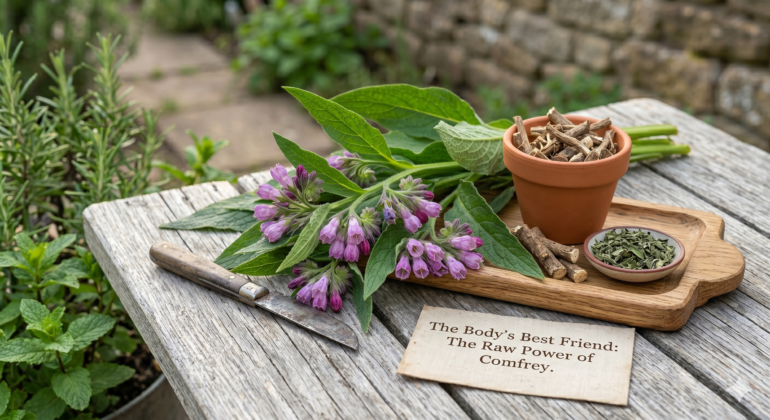
Comfrey (Symphytum officinale) is one of the most celebrated herbs in natural history, with a medicinal reputation spanning more than 2,000 years.Its common names, like “Knitbone” and “Boneset,” speak directly to its traditional use as a topical remedy for promoting comfort and restoration.
Today, modern science backs many of these ancient claims, confirming comfrey’s extraordinary power as a topical application for muscle and joint support.
The Secret Ingredient: Allantoin
The primary reason for comfrey’s fame lies in its chemical composition, specifically the presence of a compound called allantoin. Allantoin is a powerful botanical that works to:
- Stimulate Cell Growth: It helps encourage the growth of new, healthy skin cells, which is why it has been historically prized for aiding the regeneration of tissues.
- Soothe and Condition: Allantoin and the mucilage naturally found in comfrey provide a soothing, softening effect, making it an excellent ingredient for moisturising and calming irritated skin.
Targeted Relief for Muscles and Joints
Comfrey’s topical use is widely supported for its ability to target discomfort in the body’s support structure. When infused into a high-quality balm, its compounds can offer marked relief:
- Soothing Muscle Aches: Studies have shown that topical comfrey preparations can significantly reduce pain and inflammation associated with myalgia (muscle pain) and lower back discomfort.
- Joint Support: It is a traditional remedy for addressing the discomfort and swelling of joints, often used for conditions like osteoarthritis and sprains, helping to improve function and reduce stiffness.
- Bruises and Sprains: Applied topically, comfrey is a favourite for easing the pain and reducing the appearance of bruises and strains after accidents or sports injuries.
- 🔗 Recovery Starts Here
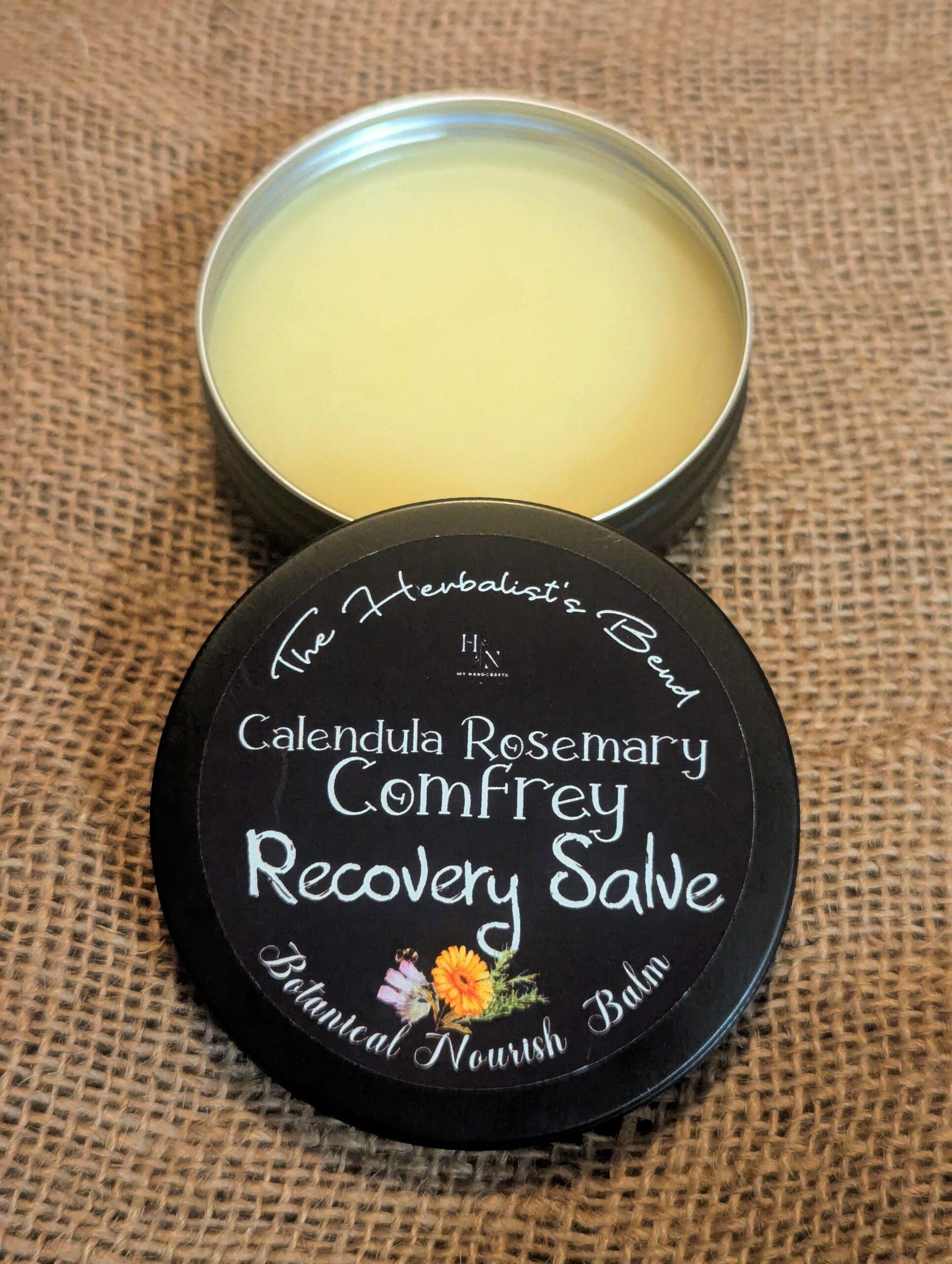
To harness the concentrated power of this traditional botanical, look for a formula that combines comfrey with other circulation-supporting herbs, like rosemary.
[Easy Link Insertion Point]: “For targeted comfort and support, explore the restorative properties of our Herbalist’s Blend: Recovery Salve, an expert formula featuring Comfrey Root and Rosemary Leaf.”
Important Safety Note on Comfrey
While exceptionally beneficial for external use, comfrey contains natural compounds called pyrrolizidine alkaloids (PAs).
To ensure safe use, always adhere to these guidelines:
- Topical Only: Never ingest comfrey, as PAs can be toxic to the liver when consumed internally.
- Unbroken Skin: Do not apply comfrey products to open wounds, deep cuts, or damaged skin. The topical action is highly effective on closed skin injuries like bruises and strains.
- Short-Term Use: As with many potent herbal remedies, it’s best suited for short-term, targeted application when relief is needed.
Sources: